This year, to mark both Women’s History Month and International Women’s Day, we are highlighting the incredible contribution of women to the field of archaeology. Their diverse contributions to research span from textiles to funerary practices, the Paleolithic era to the Post-Industrial period.
We’ve pulled out five recent Oxbow publications to spotlight here, but by no means is this list comprehensive! To browse even more titles, including those from client publishers beyond Oxbow, please check out our Women’s History Month Collection.

Animating the Dead
An Archaeology of Bronze Age Burial Practices in Orkney
by Jane Downes and Colin Richards
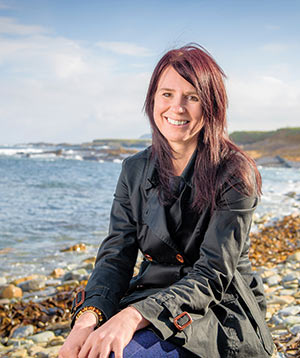
Jane Downes is Professor of Archaeology and Heritage at the University of the Highlands and Islands. Her research interests are Bronze Age and burial archaeology, with a specialism in cremation practice. She focuses also on island archaeology and sustainability, and she is a recognized expert in climate change and heritage.
Her work in Animating the Dead (Oxbow Books, 2025) co-authored with Colin Richards, presents the results of an extensive re-examination of Orkney Bronze Age barrows, their chronological development and the changing nature of mortuary and burial practices.
Threads of Contact
Tracing the Relationship Between Egypt and the Southern Levant through Textile Tools
Chiara Spinazzi-Lucchesi has a PhD from the University of Venezia – Ca’ Foscari and is a postdoctorial postdoctoral researcher at the Centre for Textile Research at the University of Copenhagen. Her specialty is in the analysis of textile tools and production in the Levant and Egypt, which is evident in her book Threads of Contact (Oxbow Books, 2025).

The Hidden Lives of Viking Women
Archaeological and Historical Perspectives
Edited by Michèle Hayeur Smith and Alexandra Sanmark
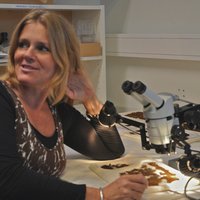
Michèle Hayeur Smith is a research associate with the Smithsonian Institution, Arctic Studies Center, National Museum of Natural History in Washington DC. She holds a PhD from the University of Glasgow and is an anthropological archaeologist with research interests in gender, textiles, dress, adornment and material culture studies. She is largely known for her work in the North Atlantic and Iceland.
Alexandra Sanmark undertook her undergraduate and postgraduate training at the University of London and obtained her PhD on the Christianisation of Scandinavia from University College London. She was then employed in the Department of Archaeology at the University of Uppsala, where she was Programme Leader for the MA programme Viking and Early Medieval Scandinavia.
Their co-edited volume, The Hidden Lives of Viking Women (Oxbow Books, 2025) combines evidence from Icelandic sagas, law codes, poems, runic inscriptions and archaeology to provide and interpret direct evidence about Viking Age and Norse women, their status, roles in religion, place in law, and agency within a strongly male dominated society.
New Voices in Iranian Archaeology
Edited by Karim Alizadeh and Megan Cifarelli
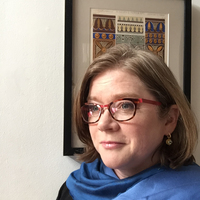
Megan Cifarelli is an emeritus Professor of Art History at Manhattanville University in New York. Her research interests include the archaeology of dress, gender diversity in the past, and the art and archaeology of ancient Iran. Her most recent work focuses on the 1st millennium BCE site of Hasanlu, Iran.
New Voices in Iranian Archaeology (Oxbow Books, 2025) is the first English publication dedicated to key recent archaeological research and excavations in Iran by, mainly female, Iranian scholars and their collaborators.
The Norse Sorceress
Mind and Materiality in the Viking World
Edited by Leszek Gardeła, Sophie Bønding and Peter Pentz
Sophie Bønding is a Postdoctoral Researcher at the National Museum of Denmark. She holds a PhD in the Study of Religion and specializes in religious beliefs and behaviors among Viking Age Scandinavians, studied through written and material sources.
The Norse Sorceress (Oxbow Books, 2023) offers a comprehensive, interdisciplinary, and contextualized investigation of the figure of the völva, situating her in the wider context of pre-Christian Nordic religion, culture, and ritual practices.