
New Academic Books for September 2026

We have new academic and archaeology books to announce for September! This month features new books from Oxbow Books and Birlinn imprint John Donald! Read on below to learn more about our recent releases. To learn more about requesting books, please visit our Exam & Review Policy and to never miss a new release, be sure to sign up for our newsletter.

Did you know? Many of our books are available across multiple digital distribution and institution platforms. Don’t see a book available on JSTOR, ProQuest, Hoopla, Overdrive or EBSCO? Let your library or institution know you’re interested.


New Books for September


Braids: Definition, Recognition and Survival

A Practical Approach for Archaeologists Towards Understanding Braided Structures
Celia Elliott-Minty

The work on which this book is based arose from the author’s interest in braided textiles and their apparent scarcity in archaeological records. The need for guidance aimed at archaeologists and others to assist them in visually identifying braids correctly was evident. Equally important was to gather details from publications on found braids to act as a baseline dataset. Textiles survive poorly in archaeological settings, and this is especially true for small items such as braids, which are seldom found and therefore poorly understood. The research on which the book is based defines and analyses these underrated textiles in a systematic way and provides other researchers with guidelines to follow. It first establishes what is a braid, which is a more contentious issue than might be thought. A range of braided structures are then explored and explained through use of clear diagrams and consistent nomenclature. Techniques for making braids are considered with the understanding that there is always uncertainty. A practical report form is devised accompanied by decision trees. A glossary section provides definitions of relevant textile terminology.

The book provides, for the first time, a reliable dataset based on published reports covering the Bronze Age to medieval period in northern and central Europe, including the United Kingdom. Detailed case studies are presented for several previously undescribed braids: the analytical methods and explanatory descriptions developed in previous chapters are applied to each artefact, and the findings carefully documented. These studies both test the proposed report form and decision trees proved and demonstrate their applicability in practice, discussing examples from both the published literature and those previously unexamined.

The book is aimed primarily at archaeologists who need an authoritative reference work to help them better understand any braided finds that they encounter. It will also be of general interest within the textile archaeology community and to braiders curious about braids created in the past and how they were used.

[More Info]
9798888572375, $55.00, Oxbow Books

Bell Beakers and the Mediterranean

Maritime Connections and Networks
Eve Derenne, Maria Ivanova-Bieg, Ana Catarina Sousa, Juan Antonio Cámara Serrano, Enrico Giannitrapani

The late 4th and 3rd millennium BCE saw the development of new long-distance maritime networks around the Mediterranean. During this late Chalcolithic phase, the ‘mental mapping’ of the Mediterranean as a maritime space reached a critical stage; the influx of new people and cultural traits, combined with a boom in seaborne exchange, meant that the western and central Mediterranean became integrated into a large maritime cultural area. Circulation routes seem to have expanded remarkably after 2500 cal BCE, enabling large-scale cultural phenomena such as the Bell Beaker complex to spread across the Mediterranean and integrate a variety of local Chalcolithic groups, both on islands and in coastal or mainland areas. These large-scale networks of interaction foreshadowed the emergence of major Mediterranean civilisations in the next millennium.

Noting that this topic had not been the subject of scholarly discussions in recent years, even though recent archaeological discoveries and analytical developments offered new opportunities to investigate these issues, the co-editors of this volume organised a session at the 2024 international conference of the European Association of Archaeologists in Rome. Their aim was to examine the origins and dynamics of Bell Beaker connections across the Mediterranean, be it in terms of material culture, subsistence strategies, technology, human-environment relationships, absolute chronology, genomic ancestry or isotopic provenance.

This resulting volume is a coherent collection of papers covering the entire western and central Mediterranean, including coastal Maghreb, the Balearic Islands, Sardinia and Sicily. The chapters present a wide variety of scales, methodological approaches and sub-topics ranging from site-based to supra-regional studies, typological and technological approaches, network analyses, computational modelling, but also raw material, isotopic and palaeogenomic data, and touch on themes such as mobility patterns, local integration, power display, exchange networks, luxury and exotic goods consumption, metallurgy and the emergence of social complexity. Some focus solely on Bell Beaker contexts, others discuss the relationships between the traditions of the preceding Chalcolithic societies and the Bell Beaker phenomenon, or the ties the latter shared with the Bronze Age groups that followed it.

Together, these contributions demonstrate the dynamic interplay of cultural, social and technological factors that shaped the Mediterranean during the late 4th–early 2nd millennia BCE. By integrating diverse lines of evidence and a wide array of methodological approaches, this volume not only provides a nuanced understanding of Bell Beaker networks and their integration with local Chalcolithic societies but also sheds light on the precursors to the major Mediterranean civilisations of the Bronze Age. The volume aims to stimulate further research and dialogue on these transformative centuries, bridging gaps in the scholarly discourse and setting a foundation for future interdisciplinary investigations.

[More Info]
9798888572399, $54.00, Oxbow Books

The Caledoniad

The Making of Scottish History
Catriona M.M. MacDonald

Winner of the 2025 Frank Watson Book Prize

Why did Scots in the nineteenth and twentieth centuries know so little about their past and even less about those who controlled their history? Is the historical narrative the only legitimate medium through which the past can be made known? Are novelists and historians as far apart as convention has it? In an age when history grounds any claims to national status, these are important questions and they have implications for how Scottish history has evolved, and how Scottish identity has been understood up to the present day.

Scottish history is not simply the distillation of Scotland’s past: authors shape what we know and how we judge our forebears. This book investigates who decided which Scottish voices of the past would be heard in history’s pages and which would ultimately be silenced. It sketches a picture of a narrow and privileged cultural elite that responded belatedly to a more democratic age and only slowly embraced women writers and the interests of ‘average’ Scots. Integrating historical fiction and popular histories in its appreciation of the Scottish historical imaginary, it most importantly tells the story of why, despite the interests of politicians and others, a truly British history has never emerged.

‘A brilliant, scholarly yet highly readable work which enlarges our understanding of what Scottish history is, and reinforces why it really matters’ – James Robertson

[More Info]
9780859767491, $39.95, John Donald

Forthcoming Books


The Archaeology of the Horse
9798888572269
Fernando Coimbra, Dragoş Gheorghiu, Zuzana Golec Mírová
$59.99

[More Info]


Sailing Textiles from Prehistory to Early History
9789464264517
Serena Sabatini
$55.00

[More Info]


The Nosch Collection
9798888572597
Marie-Louise Nosch
$35.95

[More Info]

Can’t Miss Reviews & Updates

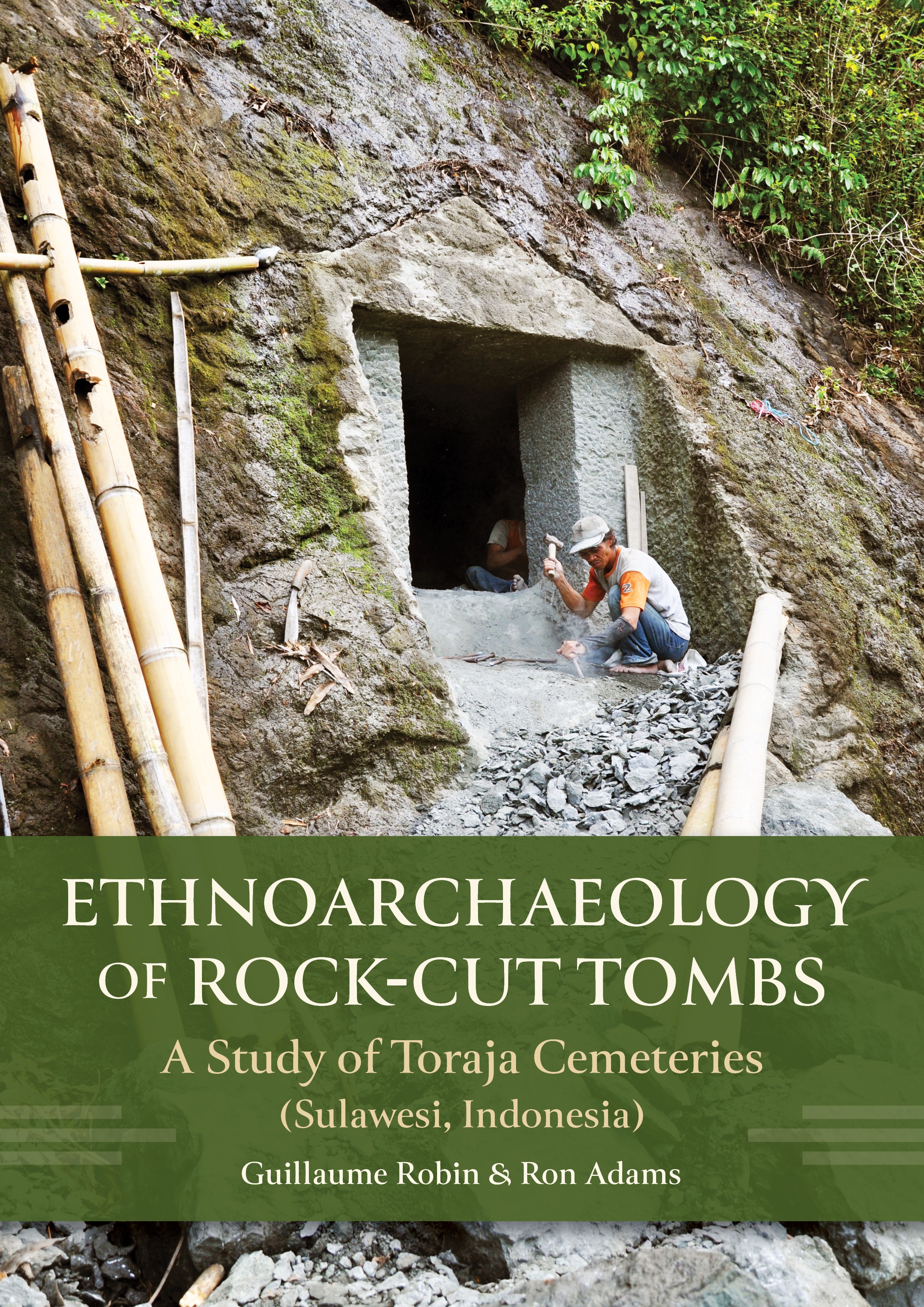
“The volume covers an amazing and refreshing gamut of topics rarely dealt with by archaeologists or ethnoarchaeologists… This is the way ethnoarchaeology should be done.”

— Antiquity
Privacy Overview

This website uses cookies so that we can provide you with the best user experience possible. Cookie information is stored in your browser and performs functions such as recognising you when you return to our website and helping our team to understand which sections of the website you find most interesting and useful.